TECHNOLOGY
Transforming Herpes Treatment with Cutting-Edge Therapeutics

TECHNOLOGY
Transforming Herpes Treatment with Cutting-Edge Therapeutics
TECHNOLOGY
Transforming Herpes Treatment with Cutting-Edge Therapeutics
OUR SOLUTION
Oximo proprietary peroxomolybdate-based formulation is innovative marking a shift from conventional pharmacological solutions to controlled, localized oxidative activity providing a unique therapeutic alternative.

OUR SOLUTION
Oximo proprietary peroxomolybdate-based formulation is innovative marking a shift from conventional pharmacological solutions to controlled, localized oxidative activity providing a unique therapeutic alternative.
OUR SOLUTION
Oximo proprietary peroxomolybdate-based formulation is innovative marking a shift from conventional pharmacological solutions to controlled, localized oxidative activity providing a unique therapeutic alternative.
OUR APPROACH
Blocking HSV
Current therapeutic options for herpes, whether topical or oral, only shorten the duration of a two weeks herpetic episode by just half a day to one day.
The development of a new anti-herpetic drug and its therapeutic application face significant challenges due to the unique characteristics of this family of viruses. Specifically, HSV does not circulate in the bloodstream, its reservoirs—primarily neurons and ganglia—are difficult to access due to limited vascularization, and its replication occurs predominantly within epithelial cells.
As a result, orally or parenterally administered compounds struggle to reach the infection site in sufficient quantities to be effective.

For this reason, the topical route of administration, applied on the site of infection, offers the most logical and efficient solution to block HSV.

OUR APPROACH
Blocking HSV
Current therapeutic options for herpes, whether topical or oral, only shorten the duration of a two weeks herpetic episode by just half a day to one day.
The development of a new anti-herpetic drug and its therapeutic application face significant challenges due to the unique characteristics of this family of viruses. Specifically, HSV does not circulate in the bloodstream, its reservoirs—primarily neurons and ganglia—are difficult to access due to limited vascularization, and its replication occurs predominantly within epithelial cells.
As a result, orally or parenterally administered compounds struggle to reach the infection site in sufficient quantities to be effective.
For this reason, the topical route of administration, applied on the site of infection, offers the most logical and efficient solution to block HSV.
OUR APPROACH
Blocking HSV
Current therapeutic options for herpes, whether topical or oral, only shorten the duration of a two weeks herpetic episode by just half a day to one day.
The development of a new anti-herpetic drug and its therapeutic application face significant challenges due to the unique characteristics of this family of viruses. Specifically, HSV does not circulate in the bloodstream, its reservoirs—primarily neurons and ganglia—are difficult to access due to limited vascularization, and its replication occurs predominantly within epithelial cells.
As a result, orally or parenterally administered compounds struggle to reach the infection site in sufficient quantities to be effective.
For this reason, the topical route of administration, applied on the site of infection, offers the most logical and efficient solution to block HSV.
MECHANISM OF ACTION
Oximo has a dual mechanism of action

MECHANISM OF ACTION
Oximo has a dual mechanism of action

Extracellular
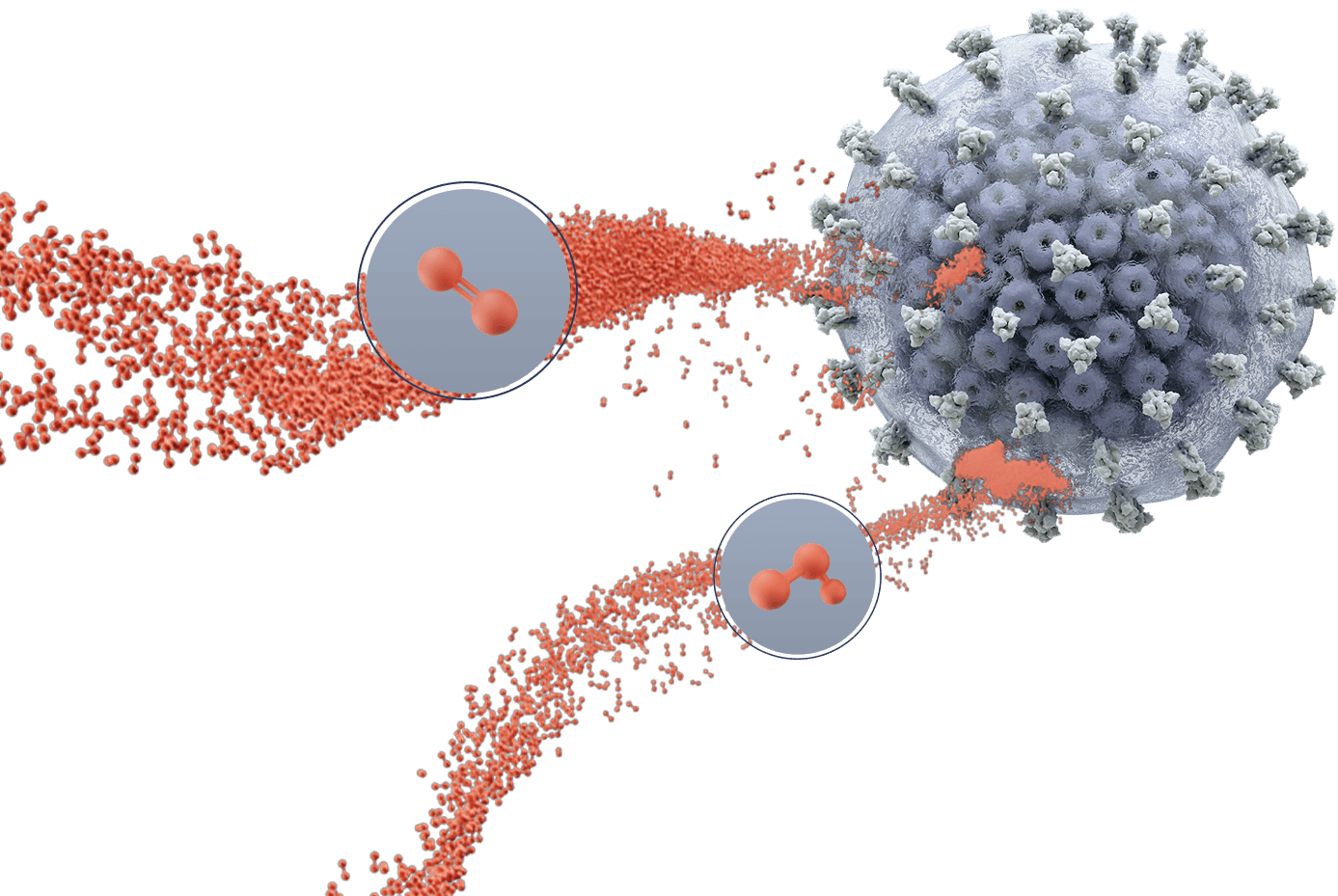
Destruction of HSV in extracellular space by the ROS
Entry
Depolymerization of the HSV cell entry Heparan Sulfate receptors widely expressed on the cell surface reduces entry of HSV into the cell
Intracellular
Entry of the compounds/ROS leads to destruction of HSV in the intracellular space
Spread
Oximo Prevents HSV Infection of adjacent cells
MECHANISM OF ACTION
Oximo has a dual mechanism of action
Extracellular
Destruction of HSV in extracellular space by the ROS
Entry
Depolymerization of the HSV cell entry Heparan Sulfate receptors widely expressed on the cell surface reduces entry of HSV into the cell
Intracellular
Entry of the compounds/ROS leads to destruction of HSV in the intracellular space
Spread
Oximo Prevents HSV Infection of adjacent cells
CONTACT
Our Product is unique
At OXYMO Technologies, we have developed extensive expertise and know-how in the manufacturing of Oximo, an original topical anti-infective product targeting HSV. Our product is protected by a broad Composition of Matter Patent portfolio with a full Freedom To Operate.
CONTACT
Our Product is unique
At OXYMO Technologies, we have developed extensive expertise and know-how in the manufacturing of Oximo, an original topical anti-infective product targeting HSV. Our product is protected by a broad Composition of Matter Patent portfolio with a full Freedom To Operate.
CONTACT
Our Product is unique
At OXYMO Technologies, we have developed extensive expertise and know-how in the manufacturing of Oximo, an original topical anti-infective product targeting HSV. Our product is protected by a broad Composition of Matter Patent portfolio with a full Freedom To Operate.